G'day! I'm Chris. I left my home in rural Australia back in 2007 to pursue a life less ordinary.
I specialize in ambitious travel - bucket list worthy journeys such as the Great US Road Trip, the ultimate African safari, and following the length of the Silk Road.
Exploring Europe by train is exciting and inspiring yet many people are surprised that the rail experience begins right from the stations. Here are the top 7 mind-bogglingly beautiful European train stations that you don’t want to miss during your train trip in Europe!
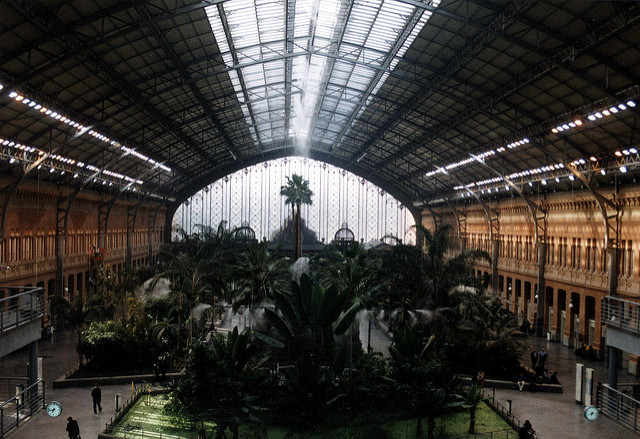
If you’re traveling on train to Madrid or if the Spanish capital is on your rail bucket list, prepare to be amazed right from the minute you step off the car! Pretty from head to toe, Madrid’s Estación de Atocha Railway Station, also called Puerta de Atocha, is recognized by thousands for its immaculate beauty. Its interior is reminiscent of an indoor botanical garden and has an extensive plaza under a glass cupola, adorned with countless green plants, trees and ponds, making it look like a petite tropical jungle. The station’s central location is also a privilege as it is close to key tourist attractions and is easily linked to the rest of the city with two metro stations.
Amsterdam Central Station is not only a major transport hub of the Netherlands but is also a tourist attraction on its own. When arriving by train to Amsterdam from Paris or another European city the first thing that grabs attention is the breathtaking 1889 Neo-Renaissance building of the Central Station that is located right on the waterfront in appealing surroundings of many canals. Interestingly, the noteworthy station stands on three man-made islands in the heart of the capital and was designed by Pierre Cuypers, famous for his design of Amsterdam’s popular Rijksmuseum. The station is within a walking distance to main sights, making it a prominent place to begin touring the city.
Budapest
When traveling Europe by train you are likely to see the charming Western railway station in Budapest, also known as Budapest-Nyugati that was built by the Eiffel Company in 1877. The iconic station is one of the three main stations in Hungary’s capital, welcoming guests of the city with its ornate exterior. Whereas if you’re traveling on train from Vienna to Budapest you are also in for a treat as you will arrive to the nearby sprawling Keleti Station, boasting a unique and striking resemblance. The building was erected in 1884 and is a noted historic monument of Budapest, adorned with beautiful frescoes on the inside and with statues of famous inventors and engineers James Watt and George Stephenson on the outside. Today it is the busiest transportation heart of Hungary.
The bustling cosmopolitan capital of France is lucky to be home to several stations that can be considered architectural landmarks. The fabulous icon of Paris, the Gare du Nord station, was completed in 1864 and is recognized today by its neoclassical style and a facade decorated with 23 marvelous statues. The engaging building has been a backdrop in numerous films including a feature in the 2004 movie “Ocean’s Twelve”. Another significant station in Paris is the lively Gare de Lyon that greets passengers traveling on train from Venice to Paris. The building’s antique clock on the rear tower is the centerpiece of the station and its notable attribute. Gare de Lyon’s chic Train Bleu restaurant located inside is also a popular tourist destination noted both for its close to royal design and delicious cuisine.
Porto
Porto boasts an extraordinary rail station, Sao Bento, that is often ranked one of the most beautiful stations in the world. Completed in 1916, it took more than 14 years to build and inside you can find over 20 thousand ceramic blue and white tiles painted by Jorge Colaco. The tiles cover a large part of the station’s walls and depict important moments in Portugal’s history. The eye-catching Azulejo tiles are an important hallmark symbol of Porto, decorating many buildings in the city. But make sure to not miss your train as you admire the beauty of the imposing and awe-inspiring Sao Bento Station! If you arrive to the city on a train from Lisbon to Porto to the Campanha Station, take a minute to enjoy it’s 1877 facade.
Is there a train station more astounding than the Belgian Antwerp Central station? Also referred to as Antwerpen-Centraal it is one of the most architecturally impressive train stations in Europe and the world. The building was erected in 1905 and is indeed eye-pleasing. It stands out with its design that mixes numerous styles including eclecticism and neo-Baroque. The spacious and picturesque Antwerp Central station has overcome multiple renovations and is made up of several levels and 14 tracks, weekly receiving hundreds of trains that connect Belgium to France, the Netherlands and other European countries and cities.
————————–
Planning to book train tickets online for popular rail routes like Vienna to Budapest or Oslo to Bergen? Start planning your rail journey in Europe with Rail.Ninja, an easy to use online train ticket reservation platform.
Your Say
Have you ever taken a rail journey in Europe? What were your highlights and lowlights?
When you think of Tasmania, what springs to mind? For most people it’s the incredible natural wonders such as Wineglass Bay at Freycinet National Park, Gordon River and the surrounding World Heritage Listed forests, or Cradle Mountain and Lake Sinclair. Even Hobart and Launceston, Tasmania’s biggest cities, are considered big, sleepy towns rather than thriving metropolises.
While the natural attractions are clearly Tasmania’s biggest assets, there’s more to the Apple Isle than meets the eye. Every summer Hobart bursts into life with a host of events that any mainland city would be proud to call their own. No matter what kind of event you’re looking for, Hobart has something just for you. From major sports to the finest cultural events you can imagine, the state capital doesn’t disappoint. So if you’re thinking of heading down for a holiday, the best time to head there is when the sun is shining. That way you can enjoy the best of spectacular scenery and action packed events.
Summer 2016/17 may be over, but it’s not too early to start planning for next summer!
To help you plan your big summer trip to Tassie, here are the top five summer events that should be on your hit list.
The Sydney Hobart Yacht Race
Constitution Dock comes alive for the finish of the world’s greatest ocean yacht race. After their gruelling trip down Australia’s east coast and across the notorious Bass Strait, the boats are greeted by a festival in full swing as they sail up the Derwent River for the finish line.
The Hobart Race Village is a free family-friendly event where you can watch the epic race unfold in comfort. Sit on the village green or lounge areas and watch the race on the big screens, and indulge in delicious food and beverages. If the race isn’t enough to keep you entertained, there are live musical performances every day. Plus, if you’re feeling particularly energetic, you can take part in Yoga, Zumba and Bootcamp style classes as well.
Not to be outdone, the Nippers-to-Skippers children’s area has a DIY cupcake bar, circus workshops, face painting and other games and activities to keep them happy and occupied.
Tasmania is globally renowned for the quality of its food, and the Taste of Tasmania is a spectacular celebration of local produce. Located on the picturesque Constitution Dock where the Sydney to Hobart yachts can be found after the race, it’s the perfect location for such an event. Take your pick of culinary delights from over 70 stalls featuring the best in seafood, fruits and cheeses to name just a few products on offer. And wash it all down with a selection of boutique and premium quality wines, beers and ciders.
But it’s not just your tastebuds that will thank you, your ears and eyes will be pretty happy as well. Free live performances are held every day and night, with over 100 buskers, musicians and DJ’s adding to the festival atmosphere. And the kids will be just as happy as the adults with a dedicated Kids In The Park space, located right across the road on the lawns of Parliament House. The little ones can take part in classes, dance performances and activities during the day, and watch family-friendly movies in the evening.
One of the biggest and most loved music festivals on the Australian calendar, the Falls Music and Arts Festival, is a ‘must-do’ for any music lover. Held over three days including New Year’s Eve, the farm location is quintessentially Tasmanian, with incredible views over Marion Bay, Maria Island and the Tasman Sea.
The world-class line-ups each year include a selection of international headline acts, plus plenty of Australia’s favourite performers. Add the 30 local Tasmanian acts on the homebrew stage and you’ve got a festival that stands up against any other this country has to offer.
And to put the cherry firmly on top of this decadent musical dessert, camping within the grounds is free for all three days. It’s a spectacular location with unbelievable views from just about every site, but it is Tasmania so you would hardly expect anything less, right?
Every year many of the world’s leading female tennis players descend on Hobart to finalise preparations for the Australian Open. Serena Williams, arguably the greatest tennis player of all time, has graced the Hobart International before, as has stars such as Dinara Safina and Australia’s own Sam Stosur. In 2017, former world number one Jelena Jankovic will be joined by defending champion Alize Cornet and world number 22 Kiki Bertens.
Get your cricket fix with a night at Bellerive Oval to watch the Hobart Hurricanes take on the world’s best T20 players. Featuring at least four homes games every year, there are plenty of opportunities to watch superstar players in action. Past and current players include the cream of the T20 crop such as Ricky Ponting and Kumar Sangakkara, plus local stars including Tim Paine and George Bailey.
Over and done in three and a half hours, the fast paced all-action style of the Big Bash League is the perfect night out for the whole family. With sixes sailing into the crowd and wickets tumbling regularly, there’s no chance the kids will ever get bored!
As you can see, there is literally an event for everyone during the summer months in Hobart.
You can be served the finest dishes by the highest quality chefs; have premium beverages prepared by incredibly talented mixologists with RSA Tasmania qualifications (The RSA qualification (SITHFAB201 – Provide Responsible Service of Alcohol) can be completed online or by correspondence by Express Online Training (Course RTO 40592); and be entertained by some of the world’s most accomplished musicians and athletes.
While Tasmania may be small in stature compared with its mainland Australian counterparts, it certainly punches above its weight when it comes to natural beauty and summer events.
So do yourself a favour, when it comes time to plan your next summer vacation, don’t discount Tasmania. Booking your flights for Hobart may be the best holiday decision you’ll ever make.
Budapest is a place where you can lose yourself in the past while still being in the present.
Located between two banks of the River Danube, the city is Hungary’s capital and was the home of the Romans in the first century. After the union of two towns, Buda and Pest, this fascinating city came into being.
When you visit this engaging city, you will find remnants from WWII. From bullet pierced walls to the Danube memorial, everything in Budapest will remind you of the torment the city had been through in the past. Every nook and cranny in the city has a story to tell, you just need to dig deeper to find what you are looking for.
If you want to be baffled by magnificent architecture while also being amused by natural beauty, Budapest is a must visit. Apart from its impressive history, Budapest is a popular stag do destination. For all the party lovers, it is a city that has a lot to offer.
Budapest’s Best!
Millions visit Budapest every year to witness the raw beauty and historical sites of the city. From art galleries to fascinating museums, the city is packed with sites to see and places to explore.
Parliament Building
If you want to see the best of Budapest’s historical architecture, make sure you visit the Parliament Building. The Parliament Building is massive and ranks as the third largest parliament building in the world. The gorgeous Neo-Gothic architecture of the building makes the visit even more impressive. The building is home to 691 rooms with breathtaking stairs and corridors.
City Woodland Park
Head to the City Woodland Park to explore the beautiful lake and the lush green fields that surround it.
This spot is a popular recreational space for both locals and tourists alike. The park spans over 302 acres of land with impressive 19th century architecture.Prepare to spend a full day at this expansive park that is home to some amazing recreation including the Municipal Zoological and Botanical Garden, the Museum of Fine Arts, and the Palace of Art.
Witness Europe’s oldest collections of scale model railways in the Transport Museum of Budapest located within the park limits.
The mystical Vajdahunyad Castle is also located within the park.
Castle Hill
Visit Castle Hill to explore Budapest’s finest castles and monuments. This hill is located next to the Danube and is a place where you will find lots of museums to learn about the rich history of the city. The best structure on the hill is the Buda Castle, an 18th century building that is home to more than 200 rooms. Bring your camera along to capture the beautiful buildings and monuments.
Partying in Budapest
When the sun goes down and you are done exploring the city, it is time to unwind. If you are looking for nighttime entertainment, you will be glad to find out that Budapest offers tons of it. The most well known spots in the city for partying, clubbing, and stag dos include downtown Budapest and the outside areas.
With plenty of clubs, bars, and pubs, Budapest is a place where you will experience a night full of fun and entertainment.The following is a list of best nightlife entertainment to be a part of in Budapest:
P2 Club
In the mood to chill out? Visit the P2 Club in Budapest, which is known for its cozy atmosphere and superb service. There are exotic dancers all around, and you can enjoy local and international cuisine.
Raktar Bar
This cool bar is the right place to spend your night packed with entertainment. It’s an international bar with youthful ambience and trendy music being played at all times. If you are in Budapest with your friends, this is a bar you must visit.
State Opera House
It is not just the bars and clubs that offer night-time entertainment to travelers. Budapest also has a strong cultural scene. If you are interested in music, opera to be exact, you must visit the State Opera House. Apart from its mesmerizing architecture, the show itself is super impressive.
Budapest is not only a popular place for architecture, art, and history lovers, but is also a city where people from all around the world come to celebrate stag parties. In fact, there are many clubs and spaces specially made for stag parties like Stag Republic and many event planners who organize stag dos.
Experiencing the Best of Hungary’s Cuisine in Budapest
Hungary is known for its sophisticated style of cooking that is also the finest in all of Europe. If you are a foodie who wants to expand their palate, Budapest is the place to be.
Onyx
Onyx is one of Budapest’s finest restaurants that serve Hungarian and international cuisine.From the ambience to the quality of food, everything about this restaurant is on point. The restaurant also serves some of the finest Hungarian wine selections. The restaurant also received a Michelin star in 2011.
Borkonyha
Borkonyha is a Michelin starred restaurant offering contemporary Hungarian cuisine. What makes this restaurant ideal for tourists is that its menu changes every two weeks, making room for a diversified gastronomic experience.
Your Say
Budapest is a city that is easy to explore, yet full of pleasant surprises. From its beer gardens to its museums, the city is packed with places to visit and things to experience.
Despite this, I still find myself daydreaming of going full digital nomad in a backpacker hotspot such as Ubud or Chiang Mai someday.
I’d heard a lot about Chiang Mai, and that it was like a spiritual meeting place for nomads like myself, so a couple of years ago I thought I’d take a look and see what all the fuss was about.
I’d been thinking about doing a more expensive trip, but since it would require some additional resources I thought I’d save that for later in the year. Chiang Mai’s cheap as chips, so off I went.
Located 700km North of Bangkok among the highest mountains in the country, Chiang Mai is the largest city in Northern Thailand. Based on the Ping River and close to many major trading routes, historically it was an important city. Now its population sits at around 200,000 residents which more than doubles during the peak tourist season.
It’s a long way from the sea in the south, so I knew it was the perfect contrast to my time in Phuket.
Arriving in Chiang Mai was easy
Traveling there was easy. I flew to Kuala Lumpur and took a 3-hour AirAsia flight to Chiang Mai airport.
At the airport, I got myself a 15-day tourist sim with TrueMove, one of the major local telcos, which for around $25 AUD gave me unlimited calls and 8GB of data.
I slipped the sim into my phone and ordered an Uber, which had recently arrived in Thailand itself. I headed off to my pre-booked AirBnB just out of the city centre. The trip cost me a few dollars and was just as good as taking an Uber in Australia, so I was pretty impressed.
The airport is only a 5-minute drive to the city. On the way, we passed the biggest, newest Starbucks I’ve ever seen. It even had a drive through. Yeah, I can see why the nomads might like it here. Not exactly roughing it, I see.
Airbnb accommodation in Chiang Mai
PIern Piern B&B
I stayed at a great little AirBnB place called Plern Plern which is just 5 minutes north of the main city area. I could have roughed it a little more, but I paid around $50/night and got a deluxe room with a king-sized bed and daily service, and it was fantastic.
The owner Add was a delight and she cooked me breakfast every morning, along with other guests from all corners of the globe. It was fun to sit around the breakfast table and chat with people visiting from France, and Germany and tons of other places. Some were in town for a few days, some for a few weeks.
Breakfast every morning was a treat!
Scooter Hire
The day after I arrived I headed over to Mango Bikes Rental and picked myself up a 125cc scooter for 7 days for 1,100 baht, or about $45.
I got pulled over by the local police 10 minutes after I picked it up, along with every other scooter rider on the main road. They were obviously out to raise some money for Friday night drinks. I whipped out my International Driver’s Licence, but they told me it was expired (it wasn’t) so I forked over the 500 baht fine ($20) and went on my way. Not worth arguing the point, I thought. For anyone familiar with South-East Asia, it’s a pretty common occurrence. Just a fact of life.
Nomad hot spots
Camp is one of Chiang Mai’s many digital nomad co-working spaces.
Right. Time to check out all the local nomad hotspots. I thought I’d start with Punspace, one of the popular local nomad co-working spaces. Sure enough, plenty of Macbooks, USB microphones, and chargers filled the various desks. Nomads were wandering around discussing apps and websites and all the rest of it. The place looked pretty clean and tidy and I could definitely see myself setting up shop there if I was in town for a few months.
Next up I headed over to Camp, a huge coffee shop + restaurant + nomad-den located on the top floor of the new Maya shopping mall. This place was first class, like most of the mall actually. Everything was new and shiny and I loved that every table had a power point next to it. I bought a coffee for 100 baht, which gave me 4 hours of complimentary wifi.
After that, I checked out half a dozen more coffee shops and cafes and, yeah, nomads everywhere. I can see why too. It’s easy to get around, safe, pretty clean and tidy, easy to get set up in, and simple if you want to stay one night, one month or one year. The visa situation isn’t that bad, and you can get a 1-year Education Visa for around $1,200 to study Thai or Self-Defense, which includes class fees and visa fees. Good value.
Food
This delicious feast cost me $3.50!
The food and drink everywhere I went was ridiculously good. I ate most of my meals at cheap little corner restaurants, and I reckon I paid about $3/meal on average. My absolute favourite was the khao soi, a Thai coconut-curry with egg noodles, vegetables and optional chicken (yes please). If you get to Chiang Mai, you’ve gotta check out a restaurant called Khao Soi Mae Sai. Out of this world.
Verdict
I could go on and on but seriously, I get it now. I’m keen to go back and stay longer. Definitely, recommend you get there and check it out for yourself.
More so than anything else, Korea is a country obsessed with festivals.
A year round calendar of festivals means that, if you’re game, you’ll rarely have a weekend where you won’t have the option to get out of town and soak up a little bit of the local culture.
You’ll find them for most anything, ranging from religious inspired festivals such as Seoul’s Lantern Festival (for Buddha’s Birthday) to debauched borderline orgies such as the (in)famous Boryeong Mud Festival.
While it’s true that a lot of the Korean social experience for expats seems to revolve around consuming vast quantities of alcohol and making out with your peers, there’s also a lot of opportunities to get out and interact with people without the influence of alcohol.
Winters in South Korea can be a tad unpleasant, but the Hwacheon Ice Festival aims to turn the cold and snow into a celebration.
Stretching for two weeks in January and February, the festival boasts a program that includes ice sledding, ice fishing, ice sculptures, a carnival, a winter village, and a lot more.
Fancy a game of ice soccer, some trout fishing in the frozen rivers, and the epic challenge of plunging into icy water to try and catch a fish with your bare hands? It’s all on tap in this very Korean way of celebrating the bitterly cold winter months.
While it might not have the gravitas of the Harbin Ice Festival in China, it’s certainly a novel way to spend a winter weekend.
As if you needed more reasons to visit South Korea’s Hawaii, volcanic and tropical Jejudo also boasts the visually impressive Fire Festival.
A New Year’s festival to encourage a good harvest, the Jeju Fire Festival sees fields set alight in a display reminiscent of the volcanoes which give the island province its distinctive landscape.
While local revelers twirl incandescent cans on wires around their heads, a procession of torch bearers solemnly sets the mountainside alight in a truly awe-inspiring (and hair singing) display of fiery piety.
In late April and early May, the sleepy town of Hampyeong is transformed by the Butterfly Festival.
April: Hampyeong Butterfly Festival
Ostensibly a celebration of Hampyeong’s butterfly population, the Butterfly Festival is more of an insect themed carnival than a display of nature’s beauty.
My visit to the festival in 2009 was more wandering between various food vendors and cheesy sideshow attractions than anything.
I have a blurry recollection of a tiny Ferris wheel, a hall full of insect displays, and an assortment of gigantic model insects with chipped paint and dead eyes.
It’s not one I’d go out of my way to see, but if you’ve been cooped up all winter – it might be the escape you need.
Jinhae’s Cherry Blossom Festival marks the start of warmer weather in South Korea
April: Jinhae Cherry Blossom Festival
A true celebration of Spring’s arrival, Jinhae’s Cherry Blossom Festival is one of many such festivals around South Korea and East Asia in general. The eye-catching pinks and whites of the sakura transform the dour winter colours in a way that energises the soul.
The festival itself is more like a county fair than a genuinely themed event, with the drifting petals and lightly fragrant trees acting as a backdrop to a celebration that includes musical performances, bustling tent restaurants, games of chance, market stalls, and other such novelties.
If flowers and games of chance aren’t your thing, the island of Jindo has a rather unusual event that takes place each April.
Sometimes called the ‘Jindo Moses Miracle Festival‘, this unique cultural event sees tens of thousands flock to the normally sleepy town to walk a land bridge that appears only once each year.
The 2.8km walk is muddy and a little crowded, but the festivities before and after the seas part are worth the trip as well.
My own experience with the Jindo Moses Miracle had us being turned around halfway due to the tide coming back in sooner than anticipated, but I’d had my fill of walking on a narrow strip of earth surrounded by silty water.
Despite living in Gwangju for two years, I never did make it to the nearby green tea fields of Boseong.
Each May, Korea’s largest producer of green tea opens its doors to allow visitors to get a hands on introduction to the beverage that graces so many tables around the country and across the world.
Activities include exhibitions, a Hanbok fashion show, tours of local plantations, the opportunity to pick and brew your own tea, and classes in how to make everything from green tea infused foods to tea bowls and beauty products.
While it also has the trappings of other crowded Korean festivals, the Boseong Green Tea Festival is a tad more cultural than your average festival.
Festivals don’t have to be cultural affairs to be worth a look, and June sees modern Korea come to the fore with Ultra Korea.
The country’s largest EDM (electronic dance music) festival takes over <> every June for two sweaty, bass pumping days.
With international artists such as Martin Solveig, Tiesto, Avicii, David Guetta, Galantis, Snoop Dogg, MIA, Empire of the Sun, and Skrillex having graced the decks over the festival’s five year history, it’s one not to miss.
Hands down my favourite Korean festival, the Boryeong Mud Festival combines a few elements that all but guarantee an unforgettable weekend: summer on a beautiful beach, cheap alcohol, and oodles of mud.
Started as a celebration of the sleepy little seaside town’s mud and its various skin benefits, the festival has become an animal all of its own. Every summer, thousands of foreigners and young Koreans descend on the town for a weekend of mud-wrestling, mud-fights, concerts, and regrettable decisions.
At the heart of swampy land in which marsh snails act as tempting meals to lightly glowing fireflies, the village of Muju plays host to a week long celebration of the enchanting insects that have inspired so many writers and musicians around the world.
While Muju is perhaps more famous for its nearby ski-fields, the Firefly Festival is a highlight on the Korean festival calendar that sees the town put on a packed festival program full of performances, demonstrations, and markets.
For fans of traditional Korean culture, the Andong Mask Festival is a celebration of traditional Korean dance and masked performance.
More than fifty events pack the festival’s program, including dance performances, puppet shows, mask competitions, theatrical performances, mask making classes, and more.
It’s one of the more culturally relevant festivals on the Korean festival calendar, and one I’d sorely like to experience for myself.
A real highlight of the Korean festival calendar, the Jinju Lantern Festival is a dizzying display of brightly coloured lantern floats forming a river of light as they drift through the heart of Jinju.
With a history dating back to the 1592 Japanese invasion of the region, the festival these days is more celebration than commemoration. While the parade of lanterns down the Namgang River is the festival’s highlight, a huge variety of stalls, restaurants, entertainments, and displays are also on hand to enchant both young and old.
A celebration of cinema in much the same way as Cannes or Sundance, the Busan International Film Festival (BIFF) is one of Asia’s largest and most significant film festivals.
Far from being a stuffy affair, BIFF attracts large crowds of young moviegoers as well as up and coming actors, filmmakers, and writers. While Korean cinema obviously holds a prominent place in proceedings, the festival is a celebration of Asian and global cinema, and a great chance to explore Korea’s second largest city while checking out some world-class movies.
The three of us hard at work at creating our masterpiece.
November: Gwangju Kimchi Festival
Alongside galbi (Korean BBQ), kimchi is without a doubt Korea’s most famous contribution to the global culinary scene. The unassuming fermented cabbage (and other vegetables) has made its way into western palettes in the form of all manner of interesting fusions, but remains a staple in Korean daily life.
My former home, Gwangju takes this love to exciting new levels each year with the annual Gwangju Kimchi Festival. While kimchi themed mascots roam and visitors sample local handicrafts and foods, the highlight is the chance to make your own kimchi from scratch.
New Year’s is a special event no matter where you celebrate it, but seeing the first sun rise of a new year over the jagged peaks of one of Jejudo’s volcanoes at the Seongsan Sunrise Festival is a pretty special way to start the next trip around the sun.
Seongsan Ilchulbong Peak is a beautiful spot year round, but there’s something special about seeing the sun crest the horizon against the same backdrop that people have been visiting since the Goryeo Dynasty.
While the weather in December/January is chilly, it’s undoubtedly the warmest you’ll get during the Korean winter.
PIN ME
————————-
As you can see, Koreans love their festivals. While I’ve listed the highlights up above, there’s plenty of others: the Slow Walking Festival being the strangest I’ve encountered. So get out, check Facebook and tourist websites regularly, and soak up some of the local flavor!
Your Say
Have you been to any of the above Korean festivals? Have I left out a personal favourite?

 By
By