G'day! I'm Chris. I left my home in rural Australia back in 2007 to pursue a life less ordinary.
I specialize in ambitious travel - bucket list worthy journeys such as the Great US Road Trip, the ultimate African safari, and following the length of the Silk Road.
When I went on my first safari way back in 2014, I went a tad overboard when it came to following the packing list Shadows of Africa had sent me.
I didn’t just buy the binoculars and the headlamp and the first-aid kit, I bought a whole new wardrobe of safari-friendly clothes.
I had a broad-brimmed safari hat, heavy-duty hiking boots, a kit to let me wash my clothes in a river, and even a pocket knife in case lions gave me grief.
Suffice it to say, I came back from the safari realizing that 90% of the stuff I’d packed wasn’t remotely necessary.
I’ll let you in on a little secret: unless you’re camping, going on safari isn’t so different to any other vacation.
The sleeping leopard wakes to regard me with disdain from his lofty perch.
What to Wear on Safari
You don’t need a brand new wardrobe of you beaut outdoor gear for your safari.
The truth is, you’re likely to spend 50% of your time comfortably seated in your safari vehicle and the other 50% of the time snug and warm in your tented camp or safari lodge.
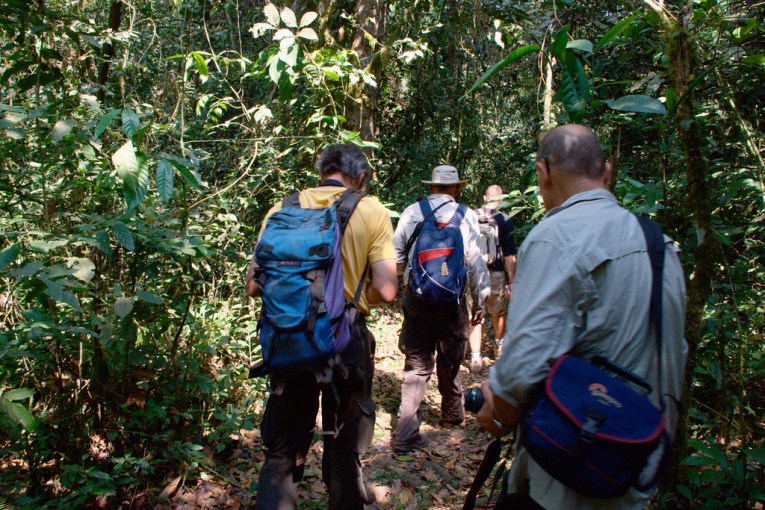
While there are undoubtedly opportunities to get down and dirty gorilla trekking or going on a walking safari, most of the time you’re going to be able to wear the same kind of clothes you’d wear at home.
Clothes to Pack for Safari
Obviously, you need clothes to go on safari.
As comfortable as those lions and giraffes look buck-naked, you’re just going to look silly with your tallywacker flapping about like a frantic leech.
As a good rule of thumb, you’ll want to pack:
T-shirts and shorts for warm weather;
Jeans or slacks for cool weather;
A lightweight windbreaker;
Something smart casual for dinner at fancier lodges;
Comfortable walking shoes;
A warm sweater or jacket;
Underwear;
Socks etc.
As you can see, it’s a pretty pedestrian old list. There’s nothing super fancy in there.
No water-proof trousers.
No state of the art hiking boots.
No safari shirt with eleven pockets.
Just regular, run of the mill clothes.
The colours are right, but what was I thinking with that hat!?
So, I can wear whatever I want on safari?
Not exactly.
There are two factors you’re going to want to take into account beyond the obvious concerns such as weather and temperature:
1). Cultural Respect
Regardless of where in the world you’re from and what might be acceptable ‘at home’, you need to be respectful of the culture you’ll be immersing yourself in.
Many African nations are more conservative than the footloose and fancy-free west, so dressing appropriately is a great way to show respect.
Don’t wear revealing clothes or clothes with offensive slogans or images.
Many African nations also take their religious beliefs more seriously as well, so be wary of that when packing.
Inquisitive giraffes rubberneck at us as we drive back to civilisation.
2). Neutral Colours
While the animals in safari parks are quite used to seeing tourists, you’ll stand a better chance of spotting the Big Five if you’re dressed appropriately.
Neutral, natural colours such as greens and browns are recommended, as brighter colours are likely to alarm animals not used to such garish displays.
If you’re in tsetse fly country, be wary of wearing black or blue – both of which are attractive to these painful little bastards.
A hippo doing its trademark yawn in a pool by the Serengeti Four Seasons.
Shopping for Safari Clothes
You might be lucky and already have everything you need for your safari, but on the off chance you don’t, sites such as LYST can be a great resource.
With a selection of more than 11,000 retailers and the ability to search by keywords such as ‘natural colours’, this site can be a godsend when doing your shopping.
Better still, it learns from your tastes and puts together curated lists for you. If your first safari turns into a second and third, you’ll have recommendations tailored to your tastes.
Sun Protection on Safari
Another vital part of your wardrobe for your safari is likely to be appropriate sun protection.
The sun out on the Serengeti or the Maasai Mara can be absolutely unforgiving, so you’ll want to make sure you’re adequately prepared.
A good, wide-brimmed hat is a good starting point, although you don’t need to get anything too dramatic.
You’ll also want sunscreen, sunglasses, and a little aloe lotion in case you do get a bit pink.
A lioness sleeps under a tree to escape the scorching Serengeti sun.
Electronics on Safari
Let’s be honest, most of us would be hard-pressed to survive a week or so without our electronics.
As enchanting as the idea of a digital detox might be, does a safari really happen if you aren’t able to Instagram it, share your thoughts on Facebook, and Skype home?
(Obviously, yes, but bear with me)
We’ve become reliant on our electronics, and a safari is no different.
Camera and charger;
Smartphone;
Flashlight or headlamp;
Travel adapter;
Battery pack.
A camera is not only vital for snapping photos, but it’s also a good substitute for binoculars if a certain someone is hogging them.
A flashlight or headlamp is a good idea even if you aren’t camping, as many tented camps may not have 24 hour electricity.
This female elephant came up to our truck to play in the puddle we were parked in.
Charging Electronics on Safari
Many safari vehicles have charging stations as a standard inclusions these days, but it pays to make sure you have a good universal travel adapter or, failing that, the right adapter for the country you’re visiting.
Check out this guide to power outlets around the world to figure out what you’ll need for your trip.
On the off-chance your vehicle doesn’t have a charger or your hotel doesn’t offer 24 hour power, it might be a good idea to buy a good, heavy duty power bank as well.
Staying Connected on Safari
If you can’t bear to be away from your online life while you’re on safari, it’s relatively easy to get connected.
Despite the perception that Africa is somehow behind the times, many countries are every bit as connected as we are used to being in the west.
In fact, with infrastructure for fiber connections a rarity, you’ll be surprised at how good the 4G coverage can be even at the heart of the Serengeti!
Local SIM cards are easy enough to obtain, although it can be a bit time-consuming to wait in line while they scan your passport etc.
A lonely hyena is spoiled for choice by the impala surrounding him.
First Aid and Medications for Safari
Heading to Africa isn’t quite the journey to “deepest, darkest Africa” that it might once have been, and while the continent undoubtedly struggles with health problems that we don’t experience in the western world, it’s still quite safe to travel if you take appropriate precautions.
Vaccinations for Safari
Exactly what vaccinations you’ll need will vary from country to country, so it’s always a good idea to consult your doctor about requirements for the specific country you’re visiting.
However, the below vaccinations are a good rule of thumb:
Hepatitis A & B;
Yellow Fever;
Typhoid Fever;
Meningitis.
Depending on where you are traveling (and your previous vaccination history), you may also want to look into Polio and Rabies vaccines.
Another shot of the leopard as it surveys its domain from its treetop roost.
HIV, Ebola, and Zika
It would be remiss of me not to mention these three intimidating diseases, even though your chances of encountering them are slim.
Unless you’re engaging in dangerous behaviour such as unprotected sex or drug-use, your risks of HIV exposure are no greater in Africa than they would be at home.
Ebola, which affected small pockets of the continent in 2014, is not a major concern as of the time of this writing.
The Zika Virus, which is prevalent across Africa, is a risk to pregnant women. While there is no vaccine against Zika Virus, taking precautions to avoid mosquito bites will protect you.
Hard to believe the Cape Buffalo is such a dangerous animal as it munches on ferns by the road.
Medications to Pack for a Safari
In addition to the above vaccinations, you’ll also want to pack a few specialized medications for your safari that you might not normally pack when you travel.
These includes:
Anti-malarial medication;
Anti-diarrhea medication;
Antihistamines for allergies and bites.
The risk of exposure to Malaria can be quite high in humid climates, so the side-effects from anti-malarial medication are worth it to avoid a long and potentially expensive hospital stay.
With mosquitoes, tsetse flies, and other biting insects likely to be a problem, having a cream or medication to reduce itching is a good move as well. Especially if you’ve got delicious blood like mine!
Lastly, a good anti-diarrhea medication is a must! While food safety is of a good standard in most lodges you’ll encounter, roadside restaurants may not have the same cleanliness standards. Likewise, water quality in Africa is generally poor, so even brushing your teeth with it can lead to some uncomfortable situations.
Trust me, you don’t want to be hunkering down on the savannah ‘bush toilet’ worrying about lions and hyenas while doing your business.
First Aid Kits on Safari
Any safari company worth its salt will have a fully stocked first-aid kit in your safari vehicle, but it doesn’t hurt to carry your own small kit with band-aids, rubbing alcohol, tweezers etc.
Seriously, mosquitoes are a pain in the ass no matter where you go, and when you factor in bloodborne diseases such as Malaria, it’s not worth taking the risk.
Tsetse flies, which can carry sleeping sickness in some countries, deliver a painful bite even without the risk of disease.
Pack insect repellent and plenty of it, trust me.
Danger! Danger! This bull elephant let us know in no uncertain terms that we weren’t welcome.
Don’t Panic
The above may seem like a daunting list, but going on a safari isn’t so different than any other trip you might take.
Sure, you need to take a few extra medical precautions and you’ll have to leave your hot pink tank-top at home, but you’re not packing for Everest.
Just remember: natural colours, something warm for night, a travel adapter, and plenty of insect repellent.
You’ll be fine.
Want to Know More?
I’m a safari expert at Shadows of Africa and I plan and book safaris in Tanzania, Kenya, Rwanda, Uganda, Ethiopia, South Africa, and Zimbabwe.
If you’re looking to make your African adventure a reality, get in touch!
I know, I know. You don’t come to my site to read reviews of products.
But Daddy’s got to put bread on the table, and sometimes that means a little compromise.
The good news is, I promise this won’t be a dry product review.
Read on. You know you want to. Image courtesy of Sennheiser.
My Murtaugh List for Travel
If you’ve ever seen the classic Lethal Weapon movies (or the How I Met Your Mother episode that references it), you’ve probably heard the phrase:
I’m too old for this shit.
Murtaugh, a long-suffering cop on the verge of retirement, continually points out the many things he is too old to be doing.
There comes a point in every traveller’s life that they must ‘retire’ certain things that were more acceptable when they were younger and poorer.
Really, it doesn’t just apply to travellers. I’m sure there are plenty of 30 somethings out there who no longer see the appeal in all night drinking, sleeping until 1 pm, or eating microwave meals from a convenience store.
Not me, I love that stuff. Forever young.
What I’m saying is that, as I’ve matured as a human being and a traveller, I’ve found some things I just don’t need in my life anymore.
1. Crowded Dorm Rooms
I’ve always been somebody who puts a lot of value on personal space, which is weird when you consider I’m the eldest of five and spend most of my time living in China.
To me, a good night’s sleep needs a comfortable bed and some quiet – neither of which you’re likely to get in a ten-bed dorm full of early rising Norwegians and night owl Koreans.
There was undoubtedly a time where my budget didn’t allow me the luxury of private rooms, but now that I’m in a relationship and making grown-up money, the idea of ‘slumming it’ in a dorm fills me with something akin to mild anxiety.
No, Hans, you can’t borrow my toothbrush! – Image courtesy of Thomas8047
Do you hate all dorms?
This isn’t to say all dorms are created equal. I’ve had the pleasure of staying in some fantastic dorm accommodation in my travels.
But run of the mill, $5 a night, dog-eared novels in the common room, ‘free Continental breakfast’ joints with one tired looking backpacker manning the front desk? Pass.
Hard. Pass.
2. ‘Backpacker’ Party Destinations
I’ve made my feelings about Boracay clear in no uncertain terms, and that general disdain extends to other crowded, touristic, party destinations such as Bali, Phuket, Koh Phangnan, and certain parts of Fiji.
If I’m being honest, I’m not sure the shy, generally unattractive person writing this post would ever have liked that scene, but he’s certainly too old for it now that he can afford a good craft beer and a private villa someplace prettier.
Not Pictured: Hordes of drunk Aussies. – Image courtesy of Thomas Depenbusch.
3. Long Haul Buses
There’s something romantic about the idea of packing everything into a backpack and making your way through off the beaten path destinations in a battered public bus.
There’s also something romantic about living in another historical era, but that doesn’t mean I want tuberculosis.
I’m past the days in which I’ll endure twelve hours on an over-crowded bus just so I can save $50.
I’ll cover that expense if it means reaching my destination at a sane hour and without having to have a stranger rub up against me for the entirety of my trip.
No! Bad backpacker! – Image courtesy of Bjorn Grob.
4. Lonely Planet
When I first got into this travel blogging gig, I had this vague aspiration of someday writing for Lonely Planet.
Then I realized that the vast majority of the ‘writing’ is just stringing together a sentence or two about each destination using information that is already out of date by the time they go to print.
Wait. You hate Lonely Planet!?
Not at all! Lonely Planet as a brand has a lot of merits.
I’m a big fan of their site and of their other publications, but their guidebooks that act as gospel to so many first time travelers are just beyond a joke now.
The problem with Lonely Planet
In a digital age in which information can be updated at a moment’s notice, it seems the height of lunacy to plan your trip based on a book that might already be a year out of date by the time you hit the road.
And don’t get me started on some of their laughable recommendations in cities I know well.
Their ‘journalists’ are afforded precious little time and money to do their research, so you’re rarely going to find anything in their books that you couldn’t find yourself.
Okay, we get it
Okay, you’ve got a lot of anger, Chris. We get it. You hate ‘the backpacker thing’. What’s the point of this post?
Ah, you’ve caught me mid-tirade again! My apologies.
I promise this all has a point.
You see, there’s a fifth thing that I’m too old for: cheap, shitty headphones.
5. Cheap, shitty headphones
It may seem like a weird thing to be hung up on, but your headphones are likely to be one of your closest companions on an extended trip.
They’re how you listen to music, audiobooks, or podcasts during a long layover.
They’re how you drown out the tortured wailing of that toddler three seats over on a red-eye flight.
They’re the prop you use to avoid awkward conversations with the no-doubt lovely old lady next to you on the train.
For something so integral to one’s sanity when traveling, it seems crazy to leave it in the hands of a cheap pair of ear-buds that hurt, reduce audio quality, and constantly tangle like mating eels.
Shh! I’ve got important napping to do. Image courtesy of Pexels.
A flawless segue a PXC 550 Headphones Review
Yes, dear reader, this is where the PXC 550 Travel Headphones come in.
As I sit here in a trendy Beijing cafe typing this post, I do so without having to hear a single bar of the awful K-Pop blaring over the speakers.
I can’t hear the chattering of the expat couple behind me or the clattering of hapless kitchen staff struggling to meet orders.
In fact, I can’t even hear Richelle. She has to wave her hands at me from across the table like a frantic mime.
There’s no cord to tangle up, the audio quality is tremendous, and I’m in my own little cone of Christopher Tin’s heavenly Mado Kara Mieru.
Bliss.
Why I Love My Sennheiser PXC 500 Travel Headphones
Let me count the ways!
1. Noise-Canceling
Noise-canceling headphones are a godsend when you’re on a long flight surrounded by coughing, snoring, shouting, crying, and random loud conversations.
The comfortable headset comes with adaptive NoiseGard noise cancellation that turns a dull roar into a muffled hiss, making it super easy to just zone out and enjoy a bit of My Dad Wrote a Porno.
“I love that they don’t hurt your ears. They are ear-shaped!” – Richelle, Adventures Around Asia
She looks better in them than I do.
2. Flawless Sound Quality
Like transitioning from a cassette tape to vinyl, you notice an immediate difference in audio quality when you switch to a decent set of headphones.
The sound is crisper, clearer, and (dare I say it?) sweeter than anything I’ve had from a $15 pair of earbuds.
It’s like wearing a pair of cushions on your head. Cushions that play Avicci.
3. Cordless
It seems like the very definition of a First World Problem, but headphone cords have become my nemesis.
Whether they’re tangling with my other cables in my backpack or randomly getting caught on something and tearing out of my ears, cords are just the worst.
The Sennheiser PXC 550 Travel Headset does away with all of that nonsense. While you can plug into your laptop, phone, or PC using the included headphone jack, their Bluetooth functionality means you can tuck your phone away and just enjoy the tunes.
No snags, no Chinese air hostess telling you to turn your phone off, nothing!
4. Hands-Free
You’ll no longer need to fish out your phone to switch tracks or pause. A simple swipe or tap on your headset flawlessly switches to the next track or pauses.
The headset is also ready to go for phone functionality, with a built-in microphone that filters out unwanted background noise to ensure you’re always heard.
No longer do I have to look like a nerdy gamer with my fold-out microphone!
5. Easy to pack
A headset is obviously a bit larger than a little set of earbuds that you can cram into your pocket.
My Sennheiser headset does, however, fold up neatly into a carry case that easily slips into my backpack.
Able to hold 30 hours of charge, you can charge it overnight and then let it sit in your pack until it’s time to tune the world out.
Don’t they look snug and comfortable in their little home?
A Little Bit in Love
As you can see, I’m absolutely rapt with my PXC 550 headphones.
It was one of those things I didn’t even realize I needed until I had it.
Like the first time I realized my Kindle meant I’d never need to lug 5-6 paperbacks on the road again.
Or when I got glasses and realized people weren’t naturally blurry.
They’re an investment, no doubt, but one I’d be glad to make all over again.
In fact, Adventures Around Asia found a pair of them in her Christmas stocking in 2017. I’m a good boyfriend!
I stole this laptop so I could take this photo.
Your Say
What is the one travel item you didn’t realize you needed until you had it?
After a year and a half on the road, I’m finally heading back to Australia for some much-needed family time.
While I’m most excited for an Aussie Christmas and a visit to Australia’s strangest theme park over New Year’s, I’m also very keen to show off my favourite NSW escapes to my girlfriend, Adventures Around Asia.
Richelle has paid a visit to Australia before but spent her last visit in Victoria. I can only imagine she was thoroughly underwhelmed by the lamest state in Australia, so I’m excited to showcase the very best that the premier state has to offer.
With two months to spend on Australian soil, I’ve come up with five fantastic weekend trips in NSW that I can’t wait to take.
Home ‘ain’t too bad!
Road Tripping NSW
While my own base for the below weekend adventures will be our humble farm in Ben Lomond, I’ve written this post knowing that many will be using Sydney as their base for exploration.
After my broken arm in Indonesia earlier this year, I’ve become hyper-aware of how important being covered at all times is. MyNRMA is Australia’s most respected option in this field, and that’s who I’ll be using in the lead-up to my six-week exploration of my home state.
Let’s hit the road!
Perfect Weekend Getaways from Sydney
Each of the below can easily be accomplished from Sydney with a Friday night or Saturday morning departure and a Sunday evening return.
#5 – Canberra & The Southern Tablelands
While the nation’s capital is technically in its own territory, Canberra’s position on the Southern Tablelands gives it honourary New South Wales status in my books.
Many might bemoan Canberra as a glorified country town due to its lack of cosmopolitan attractions, but for a history or art lover, it’s one of the best places to go. The surrounding countryside offers visitors a charming view into Australia’s more idyllic side, while the Snowy Mountains National Park is amongst Australia’s most breathtaking landscapes.
Much like Washington DC in the US, Canberra has become a hotspot for Australian history and culture. With the Australian War Memorial, the National Museum, and the National Gallery all based in Canberra, it’s a great place to learn more about the nation and its roots.
Those with an interest in politics will doubtless seek out Parliament House to see where all of the madness happens, and the young (and the young at heart) will be drawn to Questacon for all to slake their thirst for all things scientific.
My own visit to Canberra in 2008 was a bit too rushed for me to take in the capital’s cultural sights, so I’m excited to show them off on my upcoming visit.
Going Rural
The Southern Tablelands might not seem like the most glamorous patch of Australian soil to spend your vacation time on, but I’m a country boy at heart and will forever be drawn to scenes of rural serenity over the hustle and bustle of cities.
Showing off Australia’s simpler side with a visit to the Yass Valley issomething I’m especially excited for, as I’ll get the chance to visit my best friend’s family and catch up with them. You’ve heard of having a brother from another mother, but I’ve got myself a mother from another brother.
She’s assured me she’d finally convince me that lamb is the choice of champions too, so I’ll keep you posted on my battle with the meat that nearly killed me in Xinjiang.
Especially popular over the winter months with winter sports enthusiasts, the Snowy Mountains are beautiful all year round. Home to Australia’s highest mountain and some of the most stunning alpine terrain you’re likely to see in the Southern Hemisphere, Kosciuszko National Park has been on my bucket list for some time now.
Obviously, you can’t hope to tackle the Southern Highlands, Kosciuszko National Park, and Canberra all in one weekend – but you’ve got plenty of options.
Get There: Canberra can be reached from Sydney via plane, bus (3.5 hours), train (4 hours), or a three-hour drive.
#4 – The New England
The region I call home doesn’t get a lot of love from locals or visitors to Australia, but it really is an underrated gem.
They may not abound with big city conveniences, but the towns of the Australian New England make up for it with a kind of laid-back charm. From the historic main street of Glen Innes to the bustling university town of Armidale to Australia’s country music capital, Tamworth, each aspect of New England offers something a little bit different.
Tamworth’s annual Country Music Festival is one of the hottest parties outside of Sydney and is well worth a visit if you can spare a weekend in late January for some boot scooting.
My alma mater, Armidale, is one of the most gorgeous towns you’ll find anywhere in Australia. Boasting all four seasons, Armidale is especially beautiful in the autumn when the trees are aflame with oranges, reds, and golds.
In sleepy Glen Innes, the annual Australian Celtic Festival is a celebration of Australia’s Celtic roots complete with sword-fighting, mead-swilling, and mist-shrouded monoliths. It’s going to be further complemented in 2018 with the introduction of the Outlandish Festival – a fan gathering for the popular Outlander TV series.
Rocking Green Valley Farm’s famous waterslide.
Green Valley Farm: Australia’s Strangest Theme Park
For those looking for something truly unique, it’s hard to look past Green Valley Farm. Part memorial, part campground, part zoo, and part amusement park – this Tingha institution has become something of a family staple for me.
Rickety rides set against an idyllic rural backdrop make Green Valley Farm something you won’t find in the city, and while it may lack decent 4G and slick city charm, it’s got heart in oodles.
I’ve written about Australia’s strangest theme park before, and I can’t wait to return this New Year’s to ring in the New Year in appropriate style.
The walk from Ben Lomond to Glencoe is a scenic one.
Beautiful Landscapes
Pack your hiking boots, because it’s not all farms and sleepy country towns in the Australian New England.
The New England is home to some of New South Wales’ most breathtaking stretches of unspoiled wilderness, including the New England National Park, Dorrigo National Park, and Washpool National Park.
Out here, you’ll find temperate rainforest, dazzling waterfalls, and shady mountain valleys just begging to be explored.
Get There: Both Armidale and Tamworth are serviced by regional airports. You can also reach both cities by train (Tamworth: 5 hours and Armidale: 7 hours) or bus (6 and 8 hours respectively). Driving takes 5 hours (to Tamworth) or 6 hours (to Armidale).
#3 – The Blue Mountains
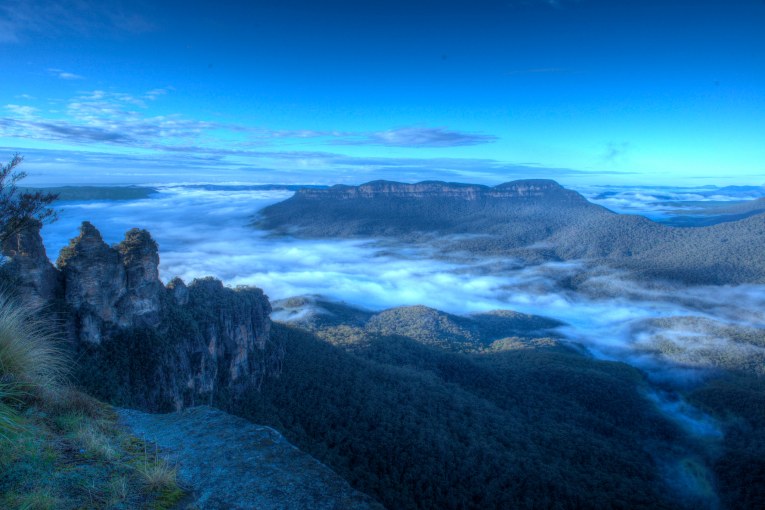
For something a little closer to home, the Blue Mountains are a weekend escape located in Sydney’s backyard.
While some may consider the Blue Mountains to be part of Sydney, it’s another world out where the winters are cold and the haze dyes the mountains a distinct shade of blue.
A land of quaint B&Bs, cute boutique shops and cafes, and unparalleled natural beauty – the Blue Mountains are worth more than just a hit and run day trip.
If boarding a flight or a long distance train doesn’t sound like your kind of escape, you won’t do much better than the Blue Mountains.
Whether you hop on a Sydney train or take your own car, the Blue Mountains can be reached in the space of a few hours. It’s the perfect way to remove yourself from the hustle and bustle without committing a lot of time and energy to travel.
For those looking for a romantic trip away with that special someone, there’s an abundance of boutique hotels and B&Bs up in the mountains. It’s easy to find your own little slice of paradise to spend a few quiet days in.
The Artsy Blue Mountains
Whether you have a penchant for antiques, crafts, bookstores, or cute cafes, the Blue Mountains is going to have something for you.
Wandering the streets of Leura or Katoomba is like taking a slice of Australiana from simpler times, and it’s thoroughly charming when juxtaposed against the cosmopolitan madness of Australia’s largest city.
Of course, the Blue Mountains are most famous for the spectacular landscape against which the tiny towns are set, and landmarks such as Wentworth Falls and the Three Sisters lend the area a level of fame that sees international tourists arrive in droves.
You can take in the sights from atop a double-decker bus or from one of the many viewing points, but the more adventurous might choose to tackle the region’s parks on foot, bicycle, 4WD, or by less conventional means. Abseiling, anyone?
Getting There: The Blue Mountains can be reached in 1-2 hours by train. It’s approximately 2 hours drive from the Sydney CBD.
#2 – The Coffs Coast
Sydney isn’t short on beaches, but a literal sea change to the picturesque North Coast of New South Wales offers new adventures and a welcome change of pace from Bondi or Coogee.
Coffs Harbour is a laid-back beach town ideally located between beautiful beaches and temperate mountain rainforest. I was lucky enough to live in Coffs Harbour for six months while at university, and it’s an area I’m excited to show to Richelle this summer.
Coffs wasn’t home for nearly long enough.
The Beaches
The Coffs Coast is home to some gorgeous beaches and, unlike their Sydney or Newcastle counterparts, there’s a good chance you’ll get them to yourself.
From windswept Sawtell to iconic Jetty Beach to peaceful Boambee to popular Digger’s Beach, there’s something for all tastes here.
I have fond memories of flinging myself off of the titular jetty at Jetty Beach, but the quieter beaches are more my speed.
My personal pick is Sawtell Beach if only so you can have a mouth-watering brunch at Cafe Treeo after your dip in the Pacific.
The drive to Coffs takes you along the stunning Waterfall Way.
Bellingen and the Mountains
A short drive from Coffs Harbour, you’ll find the deliciously hippie town of Bellingen with its outdoor markets, its friendly locals, and the allure of the gorgeous Promised Lands swimming hole.
The kind of artistic mountain town that tourism inevitably diminishes, Bellingen still holds onto a lot of its charm in the form of boutique candy shops, hemp clothing vendors, art galleries, and bustling brewpubs.
Getting There: It takes just one hour to fly from Sydney to Coffs Harbour. The train gets you there in 10 hours, while driving takes five hours.
#1 – The Hunter Valley
I first made the trip to the Hunter Valley is a wine virgin in wine country back in 2014, and I’ve been enamored of the region ever since.
Located just a few hours’ drive from Sydney, the Hunter Valley is one of Australia’s premier wine regions and a great place to get away from it all.
The main draw in the Hunter Valley is undoubtedly the region’s world-class wines, and there is no shortage of cellar doors for intrepid wine enthusiasts to sample.
Whether you stick to the tourist trail in bustling Pokolbin or try the smaller, independent wineries in Broke-Fordwich, you’ll find abundant flavours, friendly faces, and delicious food in spades.
You can arrange your own itinerary and do the driving for yourself, or you can take a wine tour from Sydney with a company like A Wine Tour in Broke (tell them I sent you) or Tastes of the Hunter Wine Tours.
A Bush Escape
You don’t need to head out to the back of Bourke to get away from it all. The Hunter Valley has serenity aplenty, and you can find it in the area’s beautiful B&Bs and farmstays.
Llama farms, working vineyards, family campsites, and traditional lodges all make up the rich tapestry of accommodation options across the region.
For my money, Broke-Fordwich is where you go to get away from it all. Set away from the tourist crowds, it’s still close enough to Pokolbin that you can visit your favourite winery without having to fight for breathing space.
New South Wales’ second largest city is often overlooked as an option, but with some of the country’s best beaches and a thriving food and arts scene, it’s worth a look if you don’t want to go too far afield.
My former home has some stellar beaches (my favourites being Redhead and Merewether) right at the thick of things, two thriving restaurant districts in Darby Street and Hamilton Street, and plenty of colonial history to explore.
The city is still remarkably affordable for its size, and you can find some great accommodation at less than half of Sydney prices.
Getting There: The Hunter Valley is a 2-3 hour drive from Sydney. Newcastle can be reached by plane (45 minutes), train (3 hours), or car (2 hours).
Not Departing from Sydney?
This list was written with Sydneysiders in mind, but maybe you’re not one of the lucky few million who call the city home. Let me know in the comments below where you’ll be traveling from and to, and I’ll get you the drive time/bus info!
If you’re like me and don’t have a car of your own yet, you can check out NRMA’s selection of Used Car Loans and their handy Car Loan Calculator to arrange your own chariot for your Aussie adventures.
Visiting Australia and don’t have the luxury of buying a car? Make use of NSW Train Link or make use of one of Greyhound’s travel passes to get around.
Your Say
I’ve highlighted five of my favourite places in NSW to get away from it all, but what are yours?
When you think about your dream East African escape, chances are you’re picturing the wide open spaces of Kenya’s Maasai Mara or Tanzania’s Serengeti.
Those wishing to trek with the beautiful mountain gorillas tend to associate them most closely with the mountains of Rwanda.
Uganda, it seems, is often overlooked in favour of one of these more well-known spots.
Always the bridesmaid and never the bride, Uganda does safaris better than Rwanda and primate trekking better than Tanzania or Kenya, but can’t claim to be the top dog for either.
Despite this, Uganda’s reputation as the ‘Pearl of Africa’ is a justified one.
There are few countries in Africa that are as beautiful, and none where you can go from a traditional safari one day to sweating in the jungle in pursuit of chimpanzees or gorillas the next.
Read on to find the ten reasons to visit Uganda that ought to get your imagination running wild.
10 Reasons to Visit Uganda, The Pearl of Africa
#10 – A Pleasure Cruise on Lake Victoria
Africa’s largest lake is often overlooked by visitors to Tanzania, Kenya, and Uganda. In Kenya and Tanzania, its location puts it away from popular tourist destinations and national parks, but Uganda happens to have a gorgeous city right on the shores of the lake – Entebbe.
The former Ugandan capital is also home to the country’s only international airport, so it’s easy to fit in a day or two on the shores of the mighty lake at the beginning or end of your Ugandan safari.
For those who might not be physically prepared for chimpanzee trekking in Kibale Forest National Park, Ngamba Island is a great day trip from Entebbe.
Offering both day trips and overnight chimpanzee experiences, Ngamba Island is a great place to learn more about our closest living relatives. Day trips feature the chimpanzee feeding, while longer stays allow guests to camp on the island, go hiking, and act as a chimpanzee caregiver for a day.
For the truly commited, the sanctuary also offers one week and one month volunteering positions.
Take a pleasure cruise on Lake Victoria
Who doesn’t love a sunset cruise with some good beer (or wine) and some finger food?
Pleasure cruises out on Lake Victoria are a great way to spend a relaxing couple of hours at the start or finish of your Ugandan adventure.
For avid birdwatchers, there are also guided bird-watching boat safaris to introduce you to the country’s startling array of birdlife.
Lake Victoria is big. While it’s most famously a part of Entebbe’s charm, you can also visit Lake Victoria at the city of Jinja.
You’ll learn more about Jinja at #7 on this list, but the adventure capital of East Africa is also home to the reported Source of the Nile.
A pleasure cruise out onto Lake Victoria to visit the fabled source of the mighty Nile is a must if you’re in the area, even if the source is little more than an eddying current of water where a waterfall used to be.
Lake Victoria Beach Holidays
It’s a sad fact that swimming in Lake Victoria is a perilous activity. Between the resident crocodiles and hippos and the lake’s problems with bilharzia (snail fever), taking a dip in Africa’s largest lake is inadvisable.
That doesn’t mean you can’t enjoy a few days relaxing on the beach with a good book or exploring by canoe though! The Ssese Islands archipelago in Lake Victoria are a popular place for locals and off the beaten path travelers to get away from the crowds and get back to nature.
Lake Victoria’s size means that there is no shortage of properties boasting waterfront access, but I’ve picked out a few of my favourite properties from my travels to recommend.
Entebbe Accommodation
In Entebbe, Boma Guesthouse is my preferred place to hang my hat. While it is not located especially close to Lake Victoria, its lovely rooms and fantastic servive make it my home away from home when I’m in Uganda for work.
If you want some waterfront access, my suggestion would be 2 Friends in the budget realm and Lake Victoria Serena in the luxury area. It’s worth noting, however, that Lake Victoria Serena is not located in Entebbe.
#9 – Experiencing the Bigodi Swamp Walk
A popular inclusion with #2 on this list, a visit to the Bigodi Wetlands is a great companion to your chimpanzee trekking adventure.
While it’s not a reason to visit Uganda all of its own, it’s certainly something a bit unique that you’re unlikely to find in Kenya, Tanzania, or Rwanda.
The main draw of Bigodi Swamp is its dazzliny variety of bird life, with more than 200 species calling the relatively small area home.
While birding might not sound like everybody’s cup of tea, you’d be surprised how quickly you become a fan when your guide points out an especially rare find.
I’m not gonna lie, I get a bird boner for a Malachite Kingfisher.
I don’t even know what I’d do if I spotted a shoebill in the wild.
Where to Stay
Check out #2 on this list for some great accommodation recommendations in the area.
#8 – Surrendering to Serenity at Chameleon Hills
I’ve been lucky enough to stay in some truly fantastic lodges in Uganda, many of which I’ve recommended later in this post.
My favourite lodge, though, doesn’t rate a mention elsewhere because it’s not really located near anything.
While many lodges boast great access to Bwindi Impenetrable, Kibale Forest, or some other local landmark, this lodge’s isolation is a huge part of its charm.
The lodge, Chameleon Hill, is a colourful and serene escape from the world that I’ve been dying to get back to ever since my first visit.
Located in southern Uganda just a stone’s through from the Rwandan border, Chameleon Hill is technically an option for those who are gorilla trekking in either Mgahinga or Bwindi-Impenetrable National Park.
Sitting halfway between the two, it’s not an ideal starting point for either, but it does give you that flexibility.
What makes Chameleon Hill’s location such a winner, however, is its isolation. Perched in the mountains above Lake Mutanda, you’ll be hard-pressed to find a better view anywhere in Africa. It’s simply stunning.
Image courtesy of Chameleon Hill
The Lodge
Brightly coloured like something out of a Wes Anderson film, Chameleon Hill leaps out at you as you round that last bumpy bend and your car comes to a halt.
The reception and dining area vaguely resembles a fairytale castle, while each of the cute bungalow style rooms boasts its own eye-catching shade of pastel.
Couple these bright colours with the breathtaking backdrop, and you’ve got something truly picturesque.
Image courtesy of Chameleon Hill
The Food
The location was fantastic, but it’s the homemade meals that linger with me years after my last stay at Chameleon Hill.
Everything – from the meat to the ice cream to the sauces – is made on site and uses locally sourced ingredients.
On top of that, the food is just f***ing amazing. Everything we ate was exquisite, and I gave some serious thought to getting down on bended knee to propose to the gentleman doing all of the cooking.
#7 – Whitewater Rafting on the Nile
The mighty Nile may be most closely associated with Egypt, but the world’s second longest river finds its roots near the Ugandan town of Jinja.
Sometimes known as the Adventure Capital of East Africa, Jinja is a thriving adventure travel hub for those wishing to tackle Nile rapids, go ATVing, cycling, horse-riding, or even bungee-jumping.
A fun city with a young, adventurous vibe – Jinja is worthy of inclusion for anybody wanting to get their pulse racing as part of their Ugandan adventure.
The biggest drawcard in Jinja is undoubtedly the opportunity to tackle the Nile rapids with a whitewater rafting or kayaking adventure. Kayak the Nile is the top local company when it comes to whitewater kayaking or more sedate kayak tours of the Victoria Nile.
There are, of course, a number of other options in and around Jinja – so do your research to land the best price.
Jinja isn’t just the place to go for kayaking and whitewater rafting. Visitors can also go horseback riding, cycling, ATVing, or even fling themselves headfirst off of a cliff with Nile High Bungee Jumping.
For those with a passion for learning more about Ugandan youth culture, the annual Nyege Nyege Festival is a celebration of African music, film, food, and art.
Where to Stay in Jinja
I’ve highlighted a few good accommodation options for the Jinja area in item #6 on this list, so scroll on down to get my recommendations!
#6 – Overnight on the Nile at Wildwaters Lodge
Uganda proudly proclaims itself as one of the sources of the mighty Nile, with the Victoria Nile finding its roots near the city of Jinja in the country’s east.
As the river picks up steam, it turns into a raging torrent that really needs to be seen to be believed. My first glimpse of the tumultuous Nile was one of those moments where you have to take a moment to be sure you aren’t dreaming or seeing things.
While there are a number of lodges along the shores of The Nile that offer a great view, there is only one lodge on the Nile, and that is the stunning Wildwaters Lodge.
Just getting to Wildwaters Lodge is a once in a lifetime adventure. You’ll trade your safari vehicle for a canoe, pile your belongings into it, and hold on as your local guide paddles you out into the seething river.
You see, Wildwaters Lodge is on an island at the very heart of the angry Nile, and you’ll be spending your night out amidst the rapids!
It doesn’t look as if your tiny boat should be able to match it with the sheer power of the Nile, but soon enough you’re through the rapids and tying up at a secluded dock to check in.
Wildwaters sits on an island in the middle of the Nile and each of their luxurious rooms overlooks the churning waters of the famous river.
Each of the rooms has a real feeling of African exploration to it, with glistening hardwood and comfortable four-poster beds for guests.
While there’s a perfectly good bathroom indoors, my favourite element of Wildwaters Lodge’s rooms is undoubtedly the old-school claw foot bathtub on the balcony.
It’s a pretty surreal feeling to be lounging in a bubble bath out under the stars while the Nile rushes by just past your feet.
A special mention also has to go to the restaurant at Wildwaters. They do a fantastic multiple course meal at the lodge, and you eat it in an open air banda with a brilliant view of the Nile as it races by.
I particularly enjoyed the feeling of sipping an ice cold Nile beer while the Nile rushed by my feet.
Other Accommodation on the Nile
Wildwaters is a once-in-a-lifetime kind of lodge that I’d recommend at the drop of a hat, but it comes with a hefty price tag that might make it a bridge too far for some travellers.
Thankfully, there are some great accommodations on the banks of the Nile that offer you a similar experience at a fraction of the price.
Haven Eco River Bush Lodge is probably my pick as the best alternative. Situated on a hill overlooking the rapids, it’s got some lovely private huts that are perfect for a romantic getaway.
From a budget perspective, Source of the Smile Guesthouse does the job. The staff are a bit disinterested and its a bit of a tacky tourist trap, but you can’t argue with its pricing. Their restaurant has some decent local and western options too.
It’s a sad fact that it is no longer possible to see rhinoceros in the wild in Uganda, but that doesn’t mean that you can’t see them. In fact, Uganda offers you the chance to get much closer than you’re likely to get on safari in Tanzania, Kenya, or South Africa.
Located midway between Jinja (source of the Nile) and Murchison Falls National Park, Ziwa Rhino Sanctuary offers visitors the once-in-a-lifetime opportunity to walk alongside the most endangered member of the Big Five.
A charitable organisation that acts as home to nineteen white rhinoceros, Ziwa lets you step out of the 4WD and walk side by side with these impressive specimens.
Accompanied by an armed ranger and with a strict pre-hike briefing, you’ll venture out onto the plains to track a rhinoceros and observe it as it grazes and moves through the sanctuary.
I paid Ziwa a visit in November of 2016 and was lucky enough to track a young mother and her calf in the wilderness.
The inquisitive young calf was constantly drawn to us, forcing us to stealthily backpedal through the undergrowth lest we earn its mother’s ire.
We never felt unsafe, but it’s hard not to respect the motherly instict of an animal with as much weight as the car you’ve been driving in all day.
It’s an amazing experience and one I’ll forever treasure.
Spending the Night
Ziwa Rhino Sanctuary is ideally located at the halfway point between Jinja and Murchison Falls, so it’s entirely possible to make your way there on your way north.
Alternatively, it can also be arranged as a day trip from the Ugandan capital, Kampala.
But if you’re feeling like you’d like a more leisurely visit, there are accommodation and dining facilities on site. You can even camp!
#4 – Witness the Raw Power of Murchison Falls
One of Uganda’s two popular safari destinations, Murchison Falls National Park’s location in the northeast of the country means that it is often overlooked in favour of more accessible parks such as Queen Elizabeth or Lake Mburo.
If you’re looking for the authentic safari experience, don’t let Murchison Falls’ isolated location put you off. It is a park of wild and rugged beauty that deserves your attention.
Like Queen Elizabeth National Park, Murchison Falls is home to four of the Big Five – with elephantsandbuffalo being common sightings and big cats such as lions and leopards being less so.
While rhinos, zebras, and cheetahs are not present, there is an abundance of hippos and giraffes, as well as crocodiles, Ugandan kob, and hyenas. In fact, this is the best park in Uganda for spotting giraffes.
A Murchison Falls game drive involves a ferry ride over the bloated Nile to get into the park, which is an experience in and of itself.
The real drawcard in the park are the waterfalls for which the park is named.
Thought of as the most powerful waterfall in the world, Murchison Falls sees the mighty Nile reduced to a raging torrent as it is forced through a tight space to continue its long journey north.
The raw power of the waterfall is hard to fully describe. You’ll barely be able to hear yourself as you approach and the mists thrown up by the churning torrent mean the entire climb is one shrouded in cool spray.
Whether you hike to the top to see it up close or take in the view of seething waves of foam from a boat below, you’re going to bear witness to a truly awe-inspiring display of nature’s power.
A Nile Boat Ride
Another popular activity in Murchison Falls National Park is to take a scenic boat safari out onto the Nile proper.
Much like the boat safari in Kazinga Channel, this offers you an excellent opportunity to spot crocodiles and hippos, as well as animals stopping by the Victoria Nile for a drink. Birds are also present in a startling variety.
The highlight of the boat ride is unquestionably the chance to stop near the base of Murchison Falls for a view of the mighty waterfall, and adventurous photographers can even step nimbly from the boat and out onto a tumble of rocks at the centre of the Nile for their photos.
Murchison Falls National Park is a bit more off the beaten track than Queen Elizabeth, meaning accommodation variety is a little more limited.
Nonetheless, there’s something for all budgets in the park.
Budget Accommodation in Murchison Falls National Park
Red Chilli Hideaway is the only real budget accommodation near the park, and boasts a mixture of private bandas, tented camps, and budget camping on their property.
Despite its lower price tag, this is still a facility with plenty of charm, delicious meals, and a fun, social vibe. They can even arrange game drives for those without their own car or tour arranged.
Medium Accommodation in Murchison Falls National Park
Located right on the banks of the Nile, Murchison River Lodge is a great option for those looking for a comfortable place to stay without breaking the bank.
The food and service at the lodge is first class, and the tented accommodations are super comfortable.
Luxury Accommodation in Murchison Falls National Park
The decadent Baker’s Lodge is my choice for the best luxury option in Murchison Falls National Park. Run by the fantastic Uganda Exclusive Lodges brand, Baker’s Lodge blends luxury accommodations with the adventurous spirit of Africa’s early European explorers.
Baker’s Lodge was my base for exploring the park in 2016, and I absolutely loved my experience.
You don’t get much closer to the action than this, with the lodge’s tents regularly receiving visits from curious hippos at night. For those wanting a truly authentic African experience, just wait until you’re being accompanied back to your tent by a flashlight wielding security guard to make sure you don’t fall afoul of a startled hippo!
A Note on Bookings
A lot of these properties aren’t on sites like Booking.com, but you can get access to reduced rates by booking through a certified travel agent. Luckily, I happen to be one!
Contact me if you’d like some help in planning your Ugandan safari.
#3 – Game Drive in Queen Elizabeth National Park
It’s fair to say that the likes of the Serengeti National Park, the Maasai Mara, and South Africa’s Kruger National Park are amongst the best game drive destinations in the world. When it comes to sheer wildlife diversity and numbers, these larger parks have it all over Queen Elizabeth National Park.
But as you photograph tree climbing lions in Ishasha or sit by a crackling fire and listen to the distant trumpeting of elephants, it’s hard to care that other places might be doing it better.
Queen Elizabeth National Park is home to four of the big five, with lions, elephants, and buffalo being especially common throughout the park. In particular, the Ishasha section in the park’s south is home to tree-climbing lions. This is a phenomenon that only occurs in a few places on earth!
While you’re missing a few iconic African animals such as giraffes, rhinos, and zebra, this is made up for by the presence of more unique sightings such as the Ugandan kob, sitatunga, and topi antelope.
You’ll also find an abundance of hippos and crocodiles along the shores of the Kazinga Channel, and both black and white colobus monkeys and chimpanzees dwelling in certain areas of the park.
Chimpanzee Trekking in Queen Elizabeth National Park
A quick note on the presence of chimpanzees in Queen Elizabeth National Park.
While it is entirely possible to arrange a chimpanzee trekking tour as part of your stay in the park, I really would recommend paying a little extra to do it in Kibale Forest National Park. Trekking conditions are infinitely better in Kibale, and you’ve got a far greater chance of actually seeing something.
Unbeatable Location
What makes Queen Elizabeth National Park so worthwhile is its unbeaten location. Located at the halfway between the chimpanzees of Kibale and the gorillas of Bwindi-Impenetrable, it’s the perfect place to spend a few days between your primate trekking adventures.
Many people wishing to see both of Uganda’s iconic primates will spend a night or two in Queen Elizabeth to break up the long drive and to check a few more animals off of their African bucket list.
A 20 mile long natural channel that connects Lake Edward and Lake George, Kazinga Channel is a unique feature of Queen Elizabeth that offers something you won’t find in other parks.
Taking a boat out onto the channel offers you the chance to spot hippos and crocodiles up close, and there’s ample opportunity to also spot buffalo, elephants, antelopes, and big cats as they come to the shores to get a drink.
But its for bird-watching that Kazinga excels, and even the most disinterested birder is going to come away with a newfound appreciation of just how beautiful Africa’s bird species can be.
Don’t believe me? Queen Elizabeth National Park is home to the largest variety of birds in all of East Africa’s protected areas.
Queen Elizabeth National Park’s accessibility makes it a great safari destination for travellers on a budget.
Where large parks like the Maasai Mara and Serengeti tend to cater towards those with a substantial budget, Queen Elizabeth has backpacker friendly accommodations located just a stone’s throw from the action.
Budget Accommodation in Queen Elizabeth National Park
It’s rare to find dormitory accommodation near a safari park, but Simba Safari Camp offers just that.
I stayed here in 2015 and found it to be totally fine. The rooms are a bit dated and the place has a very ‘budget’ vibe to it, but there are also private rooms available.
The outdoor common area for meals has a fun ‘BBQ in the park’ kind of feel. The WiFi is near to non-existent.
For those on a tight budget, they also offer campsites.
Medium Accommodation in Queen Elizabeth National Park
My two favourite lodges in Queen Elizabeth National Park would be Queen Elizabeth Bush Lodge and Marafiki Safari Lodge.
Queen Elizabeth Bush Lodge was my base in the park in 2016 and feels like you’re truly at the heart of Africa. Your tented accommodation has a rustic outdoor shower and you’ll fall asleep lulled by the chortling of wading hippos in the nearby river.
Marafiki has a more clean, modern look to it – but also offers dorm accommodation to complement its tented rooms. It sits atop a hill and has a great view of the surrounding land.
Luxury Accommodation in Queen Elizabeth National Park
My favourite luxury lodge in Queen Elizabeth National Park is undoubtedly Katara Lodge. A newer lodge that opened in 2015, its private tented accommodation looks out over a sprawling landscape that speaks to the awesome natural beauty of Africa.
I was a big fan of the outdoor dining area and the friendliness of the staff, and can’t wait to have a long stay at the property so I can enjoy the serenity upon which it markets itself.
A Note on Bookings
A lot of these properties aren’t on sites like Booking.com, but you can get access to reduced rates by booking through a certified travel agent. Luckily, I happen to be one!
Contact me if you’d like some help in planning your Ugandan safari.
#2 – Chimpanzee Trekking & Habituation in Kibale Forest
If there is one thing that Uganda does better than anybody else, it’s chimpanzee trekking
Forget what you’ve heard about chimpanzee trekking in Nyungwe National Park in Rwanda – Uganda’s Kibale Forest National Park is the best place to see our closest primate relatives in their natural habitat.
Far and away the most popular thing to do in Kibale Forest National Park is the half-day chimpanzee trekking experience.
A comparatively affordable $120 USD per person, the chimpanzee trekking experience starts at around 7am and sees you traipsing through the cool forest air in pursuit of the chimpanzees who call the park home.
The chimps here are wild but slightly habituated. They aren’t going to stick around for you to snap photos of, but they’re also not so afraid of you that they’ll immediately flee at the snapping of a branch.
Where in Rwanda you’re forced to literally run after the chimpanzees, here you’re able to approach at a more sedate pace. It’s a relatively easy hike that sees you moving with the family as it hoots, hollers, swings, and drums its way through the treetops overhead.
Actual trekking groups are quite small – no more than 4-8 people per group – but you’ll doubtless cross paths with other groups as your guides share notes.
It’s a hell of an experience, and one I’d consider a must in Rwanda.
For those with a more keen passion for all things chimpanzee, it’s also possible to arrange a full day chimpanzee habituation in which you’ll track the chimps from dusk ’til dawn.
You’ll observe the chimpanzees as they feed, sleep, play, and travel – spending your entire day out in the wilderness.
I’ve not had the pleasure of trying this myself as of yet, but my friends and clients who have raved about the experience as a far more intimate, less-crowded way to see the chimps.
Kibale Forest National Park is serviced by some great local accommodation options, and the nearby town of Fort Portal also has some good options for all budgets.
Budget Accommodation in Kibale Forest National Park
The cheapest option in the area is Ruboni Community Camp, which has both private cottages, campsites, and hostel-style dorm rooms.
Medium Accommodation in Kibale Forest National Park
I’ve been lucky enough to stay in two wonderfully rustic lodges in the Kibale Forest Area, with both Kibale Forest Camp and Primate Lodge offering comfortable accommodations that feel very much a part of the surrounding forest.
Primate Lodge has a fantastic location that puts you just a few hundred metres walk from the chimpanzee trekking start point, while Kibale Forest Camp definitely feels like you’re at the heart of an African jungle.
Luxury Accommodation in Kibale Forest National Park
It’s not especially close to the park, but I can’t speak highly enough of the lavish Kyaninga Lodge. Located on the rim of an ancient volcanic crater, this lodge has spectacular views and an adorable ‘European adventurer’ motif that makes you feel every bit like the explorers of old.
Ndali Lodge is also a wonderful option, with the family-run business feeling more like a luxurious B&B than a hotel. The food is delicious, the dogs are friendly, and the pool is a great way to unwind after your chimpanzee trekking adventure.
Both of these lodges put you a little far from the action, so a more centrally located option might be Kluge’s Farm.
#1 – Gorilla Trekking in Bwindi-Impenetrable National Park
While neighbouring Rwanda may be more famous when it comes to gorilla trekking, Uganda remains the most economical option for those wanting to see these gentle giants in their natural habitat.
Rwanda’s recent decision to jack up prices to $1,500 USD per person has priced many gorilla enthusiasts out of ever achieving their dream, but Ugandan gorilla permits remain stable at a relatively affordable $600 USD per person.
It’s true that Rwanda offers more accommodation options and an easier hike than Uganda, but in my mind, there’s something very fitting about the hard slog through the jungle. I’ve written before about my own gorilla trekking experience and how I felt like I had earned my precious hour with the gorillas, and I think that’s a big part of the charm.
Every pained breath, every drop of sweat, every scratch from thorns, and ever muddy stumble is the price you pay to spend an hour in quiet contemplation alongside those beautiful creatures. Gorilla trekking is tantamount to a religious experience.
It’s true that Bwindi-Impenetrable National Park is a bit difficult to get to from Entebbe. There’s a long ten-hour drive between Uganda’s only international airport and Bwindi.
Thankfully, you can visit Bwindi as part of an eight-day Ugandan safari circuit that includes Kibale Forest National Park and Queen Elizabeth National Park. You then swing through Lake Mburo National Park on your way back to Entebbe.
Alternatively, you can go gorilla trekking from Rwanda. You’ll land in Kigali, make the stunningly scenic six-hour drive north to Bwindi, and then return to Kigali. It gives you access to a much more well-connected airport and ends up being a shorter drive.
Gorilla trekking is obviously the main attraction in Bwindi-Impenetrable, but the area around Buhoma is quite stunning. Dense mountain rainforest surrounds a quaint little mountain town where upmarket hotels rub shoulder with local businesses.
Popular activities within the park include hiking to a picturesque waterfall, visiting with the local Batwa pygmy population, or take a longer hike between local settlements.
Where to Stay When Gorilla Trekking in Bwindi-Impenetrable National Park
It’s important to note that Bwindi-Impenetrable National Park is a large park (more than 32,000 square kilometres) and that the gorillas range wherever they please within this space.
With that being said, specific families tend to range in specific areas, so there are a number of ‘hubs’ that exist.
The most popular of these is Buhoma, but other smaller centres include Rushaga and Nkuringo.
Budget Accommodation in Bwindi-Impenetrable National Park
Both of these properties offer backpacker style dorm rooms and private rooms, making it a good way to save some money after dropping $600 USD on a gorilla permit.
Medium Accommodation in Bwindi-Impenetrable National Park
My go-to option in the affordable luxury tier would be Buhoma Haven Lodge, which affords a spectacular view of both Buhoma and the surrounding forest.
It’s a bit of a hike to get up to your room, but you won’t be complaining when you’re sitting out on your private deck after your gorilla trek with a cold beer in hand.
Luxury Accommodation in Bwindi-Impenetrable National Park
Mahogany Springs is, in my mind, the best lodge when gorilla trekking in Uganda.
I’ve had the pleasure of staying at Mahogany Springs in both 2015 and 2016, and both times I was met with the same fantastic rooms, wonderful service, fantastic food, and spectacular location.
The staff there are so good that they remembered me a year on and knew exactly what my beer order was.
And, it’s a small thing, but their free shoe-cleaning service is a life saver after gorilla trekking.
So many reasons to love Uganda
As might be evident after reading my 5,000+ word love letter to Uganda, I’ve got a bit of a crush on the country.
My two week long explorations of the Pearl of Africa have only served to whet my appetite.
I’ll forever love Africa, but it’s Uganda that holds the largest portion of my heart.
It is wild and vibrant in a way that speaks to me of the Africa I’d always imagined.
While tourism is a continually growing industry in the region, it can still be daunting to plan a trip to Uganda.
Thankfully, I’m here to help.
As a safari expert with Shadows of Africa, I can not only help you with your itinerary, but I can also get you great discounts on hotels and activities. Contact me below!
Click the image below to send me an email and start planning your dream safari!
How to Get the Best from a Hunter Valley Wine Tasting
When you visit the Hunter Valley it is simply impossible to not be tempted by the enormous range of delicious food and wine options available to taste in this region. With Semillons, Verdelhos, and hot climate Shiraz varieties that have impressed everyone from James Halliday to even the most discerning French connoisseur, you will find yourself, wine glass in hand and salivating at the adventure to come when you enter any cellar door in the Hunter.
However, just as all wines are not created equal, all tasting experiences are also not equal. The vast majority of wineries in the Hunter Valley are boutique outlets who simply don’t produce enough bottles to meet the demand requirements of large retail outlets like Dan Murphy’s or Liquorland. So 95% of their sales come directly from cellar door tastings (the other 5% being to local restaurants) and naturally, their staff is keenly aware that their ability to keep their job in the long term comes from sales.
Having experienced many US and New Zealand wine tastings, I can proudly say that the Hunter Valley region has some of the most professional cellar door staff you will ever meet. People who know their products and communicate their passion for them well.
So, they don’t need to go the “high pressure” route of bullying you to buy. With that being said, many a cellar door owner or manager has felt the heartache when a group of twenty people books for a tasting, consumes many bottles of their produce, and after an hour of one of their staff’s precious time, they have to watch the group say “thanks for the free samples” and walk out empty-handed.
Cellar door staff are all too familiar with this scenario and they are looking for some tell-tale signs from the time a group arrives, in order to identify if this might be an issue and what they can do to minimise their risk/losses.
So how can you get the most from your tasting experience?
If you know some of the signs cellar door staff are looking for and how to send the right message during your tasting then you can find your experience is completely different to that of another group. You might get to try an aged wine or a premium version of the wines that are on the standard tasting list. Often the cellar doors have plates of cheese and biscuits made up or chocolates that compliment their produce that they only bring out for the “right” groups.
Not to mention receiving more generous tasting portions.
As someone who has seen many wine tastings, here is my “insider” guide on how to make you or your group come across as the “right” tasters and get more from your cellar door experience….
An Insider’s Guide to Wine Tasting
1. Ensure you look the part
This doesn’t mean you need a suit and tie! Smart casual is the way to dress. You would be surprised how many guests I’ve seen show up to a wine tasting with bare feet, ripped jeans, washed out t-shirts etc. You don’t want to give the impression that you’d rather be at the pub with a schooner of beer!
2. Don’t be seen drinking other beverages on the way in
Putting your Raspberry Vodka Cruiser bottle in the garbage bin just before you walk in the door might seem like a good idea at the time but it certainly suggests that you are more interested in a party than finding a quality bottle of vino. And the cellar door staff also know that after such a sweet beverage, your palate is ruined for tasting the subtle and complex fruity flavours of a quality wine.
Everything is going to taste quite acidic after a bottle of sugary mixer drink and prompt a “these wines are horrible” response, so the logical course of action is to cut back your tasting portions. I’m sure this isn’t what you had in mind!
3. Remember that the staff are listening to every word you say and watching everything you do
A good hospitality professional will keep smiling and making you feel welcome no matter what, but it would be a mistake to think that they aren’t listening to the group chit-chat in-between pouring tasting portions.
Who do you think will get more generous tasting portions and maybe get to try a premium or aged wine?
The group who consumes all of their portions, says nice things about them and comments on the wine they bought from a lovely boutique vineyard last year? Or the group who comments that they don’t enjoy wine, they were dragged along to the occasion as the venue was the idea of the group organiser and that Passion Pop is their beverage of choice!?
4. Listen to the presentation and ask questions that show you are interested
You don’t have to be a wine connoisseur or ask complex questions that show-off your wine intelligence, but if you ask simple questions that suggest you are genuinely interested in the products, then you will get much more attention from the cellar door staff.
A few good examples include:
“How long will this wine last for if I wanted to store it long term?” or “Do you use fruit 100% grown in the Hunter Valley or do you source fruit from a variety of locations?” or “You mentioned 2015 was a good year for winemaking, why was that so?”.
The cellar door staff will feel you really appreciate their knowledge and their presentation if you ask such questions. It is human nature to want to feel appreciated and we all go the extra mile when we feel our efforts are valued so this one is just common sense.
However, I have seen so many groups simply chat amongst themselves and completely ignore the presenter at a group wine tasting leaving the poor cellar door presenter to have to try to speak loudly or even yell to get through their presentation. Other than the fact it is simply rude, place yourselves in the shoes of the staff member. Would you bring out that little something extra for the group who isn’t even listening to you?
5. Arrive with a local tour guide who knows the cellar door staff well
As a tour guide who lives locally on the doorstep of Hunter wine country, I am so lucky to enjoy not only amazing wines but amazing friendships with the cellar doors that Tastes Of The Hunter Wine Tours has worked with. My groups have been offered private tastings in underground cellar rooms, cheese, biscuits and chocolates and even special VIP pricing as well as tastings led by the cellar door manager or even the owner of a boutique vineyard, so choosing to join a tour led by a Hunter Valley local is definitely a great way to get an enhanced tasting experience.
6. And lastly, it’s just good manners to find something to purchase at the end of your tasting
Just as it is good manners to bow with respect in certain countries, it is simply the right thing to do to find something to purchase after a wine tasting, especially if the cellar door has not charged you to taste their products. Even if it is just 1 or 2 bottles, it makes an enormous difference to a boutique cellar door to cover their costs or do better. It’s a small way of thanking the cellar door staff who have delivered both friendliness and professional service to your group.
You will also get a much more generous tasting portion if you pull out your credit card and say “I’d like to purchase a good red wine for my husband but I can’t decide between the Merlot or the Cabernet Merlot. Could I taste them both?”. If the staff can tell you are serious about a purchase (whether it is big or small) they will certainly give you a little something extra.
————————
Whether you are visiting the Hunter Valley or any wine region, you can apply these tips to get more from your tasting and go beyond the stock standard experience being offered. And the best part is the majority of these tips won’t cost you a cent, yet will get you a priceless and memorable experience worth making your friends envious about on Instagram!
Your Say
Have you ever had a fantastic wine-tasting experience?
I fell a little bit in love with the Hunter Valley when I went their as a wine virgin, and have since had some great times on San Diego wine tours or personally designed adventures.

 By
By